

Projects
We seek to enhance multispecies flourishing through our research projects which we collectively advance through our research lab.
Research Lab
Our research projects are advanced through the Multispecies Collective Research Lab. The lab is open to members and occasional invited guests only.
The lab is a gathering of minds—as opposed to a physical space—in which our members forward their individual and collaborative research projects in pursuit of multispecies flourishing. In other words, this is where the magic of mutual inspiration, co-learning, blank-page-busting, and brainstorming occurs.

Objectives
The Multispecies Collective Research Lab is informed by these objectives:
Discussion
Facilitate broad discussion of, for example, ideas, philosophies and policies implicated by members' research.
Development
Discuss direction, priorities, and activities for the Multispecies Collective.
Feedback
Contemplate and generate feedback on members’ research projects from initial conceptualisation to impact generation.
Collaboration
Introduce and develop collaborative project ideas or commissions.
Formats
The Multispecies Collective Research Lab can adopt these formats:
Multispecies Collective Updates
Members provide updates on current projects for discussion.
Multispecies Collective Feedback
An element of one member’s work is submitted in advance or summarised in the lab for brainstorming and feedback.
Multispecies Collective Workshop
An external expert is invited to collaboratively workshop members’ projects and their own work
Multispecies Collective Retreat
Excursions for mutually productive and grounding experiences focused on writing, connection with nature, or both.
Research Projects

(Be-)Coming Across Animal
Gray Black
Speciesqueer identities fall outwith the human and non-human binary. With the numerical majority also finding belonging within the wider 2SLGBTQIA+ community, historical inquiry makes a case for speciesqueers as a queer counterculture disassociated from the homonormativity of the late-20th Century. (Be-)Coming Across Animal is a sociopolitical analysis of the transnational genesis of contemporary speciesqueer culture and, moreover, the eco-ethical relations embodied and enacted through the lens of queer, multi-species imaginaries. In order to invite gender- and sexually-diverse peoples into political solidarity with non-human agencies, this project seeks to answer the following primary question: “In what ways do speciesqueer identities help to articulate the coalition potential between queers and non-human animals?”
Achieving Marine Biodiversity Conservation in the Nordic Region
Bethan Smith
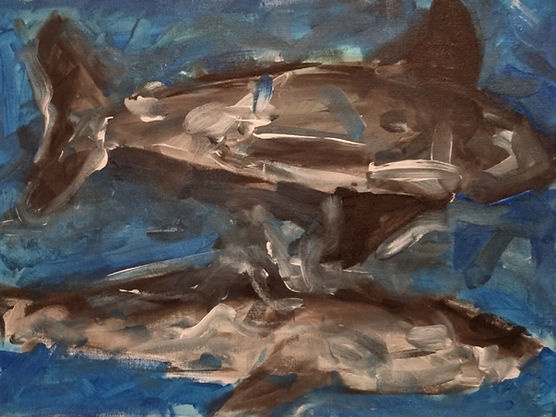
The primary aim of this research is to examine the extent to which biocentrism could provide an ethical foundation for the protection of cultural identity without the marine hunts in the Nordic region. To achieve this research aim, three research objectives will be addressed. Firstly, to examine what biocentrism is and the extent it can protect the marine species hunted in the Nordic region. Secondly, to examine the extent to which domestic laws in the Nordic region regulate the hunting of marine mammals and apex predators. Thirdly, to examine the ways in which cultural identity can be recognised in and integrated into a biocentric solution when making the marine hunts illegal in the Nordic region.

Animal Citizenship
Isabel Stanley
This project is an original exploration into whether UK assistance dogs (ADs) are performing ‘Acts of Citizenship’ (as defined by Isin and Nielsen, 2008). If so, the implication is they provide a unique, unexplored case to test how animals could be integrated into political communities as formal citizens, with the protection accompanying this status. ‘Acts of Citizenship’ are acts performed by individuals to make a rights claim and disrupt political norms by circumnavigating a system supressing the claim (Isin and Nielsen, 2008).

Carceral Logics and Animal Welfare Crimes In Europe
Claire Lathwell
This research project explores and problematises how shifting discourses shape the prosecution and sentencing of animal welfare offences in England and Wales. This issue will be investigated through a discourse analysis of theoretical literature, historical documents and observations of court hearings relating to the Animal Welfare Act 2006 in England and Wales.

Education for Multispecies Flourishing
Christina Easton
This project examines what educational institutions, as branches of the state, owe to human and non-human animals. It considers the role of schools in shaping children's attitudes and relationships towards other species. It does this through work on the case for schools promoting plant-based diets (both in lunches and in lessons), as well as examining the broader educational responsibilities that arise when schools mediate children's relationships with non-human animals.

Energy Justice, Access and Transition in Nigeria
Love Alfred
This project investigates the lack of multilevel energy justice frameworks in Nigeria and explores how this gap is resulting in an ‘unjust’ transition. Using the transition theory, the study analyses multilevel governance issues, tracing them to historical energy access marginalisations and the dynamics of sociotechnical transitions. It argues that a Multilevel Perspective (MLP) Framework can better enable a just and orderly transition in Nigeria, in a manner that integrates small scale renewable energy producers and leaves no one behind. It recommends a reconceptualization of the current transition strategy to one that considers MLP perspectives. The project explores what a comprehensive legal and institutional framework that integrates energy justice would look like and further examines the practical challenges of implementing such recommendations.

Feeding a Humanitarian Disaster
Sean Madden
The study elucidates an explanation for how colonialism and imperialism has shaped and enabled the current system of exploitative and damaging industrial agribusiness, and its attendant implications for food security, human rights, and the climate. It outlines how regimes nominally established to aid post-colonial states in fact contribute to and perpetuate the deleterious status quo.

Global Animal Law from the Margins
Iyan Offor
This project critically engages the emerging field of global animal law from the perspective of an intersectional ethical framework. Reconceptualising global animal law, this project argues that global animal law overrepresents views from the west as it does not sufficiently engage views from the Global South, as well as from Indigenous and other marginalised communities. Tracing this imbalance to the early development of animal law’s reaction to issues of international trade, the project elicits the anthropocentrism and colonialism that underpin this bias. In response, the project outlines a new, intersectional, second wave of animal ethics. Incorporating marginalised viewpoints, it elevates the field beyond the dominant concern with animal welfare and rights. And, drawing on aspects of decolonial thought, earth jurisprudence, intersectionality theory and posthumanism, it offers a fundamental rethinking of the very basis of global animal law.

Investigating the Animal Welfare Strategy for Africa
Mo Esan
This project critically examines the African Union’s Animal Welfare Strategy for Africa (AWSA) as a regional legal framework for animal protection. The research investigates both the “upstream” international processes that shaped AWSA’s drafting and adoption, and the “downstream” domestic implementation within African Union member states. Using a Third World Approaches to International Law (TWAIL) lens, the project interrogates how colonial legacies, global governance structures, and local socio-political realities shape the development of animal law in Africa. Methodologically, the research employs doctrinal analysis of legal texts, complemented by critical analysis drawing on decolonial theory, critical race theory, and critical animal studies. The project aims to map the normative and practical possibilities for harnessing AWSA into a useful framework that provides a pathway for increased animal protection in Africa.

Multispecies Participation, Law, and Transformative Change
Michelle Strauss
This project consits of Michelle Strauss's that sits at the intersection of scholarship, activism, and creative practice. Grounded in her PhD research in environmental law, she explores how legal and political systems might be challenged and re-made to include non-human beings - animals, rivers, ecosystems- as participants rather than abstractions. Developing a multispecies participation framework, her work interrogates how existing models of governance reproduce anthropocentric, colonial, and exclusionary logics, even where they claim inclusivity. Crucially, her research is driven by a commitment to practical change - using theory not as an endpoint, but as a tool for intervention. Through legal analysis, collaborative projects, and experimental formats, she seeks to disrupt entrenched systems and open space for more just and relational multispecies futures.

Nonhuman Justice
Emily Jones
In the context of the environmental emergency, including climate change, pollution, environmental degradation, and the loss of biodiversity, it has become clear that the anthropocentric perspectives that have long dominated all disciplines have failed. This has led multiple researchers to argue that environmental law, despite seemingly being there to protect the environment, is part of the problem, helping to sustain the unsustainable practices that have brought us to the point of environmental crisis. New, interdisciplinary, post-anthropocentric approaches are needed. The Nonhuman Justice project will address this lacuna, drawing together the sciences, the arts and humanities and the social sciences to seek new laws, policies and ways of thinking about the environment and nonhuman animals.
Oceanic Interconnection
Louisa Dassow
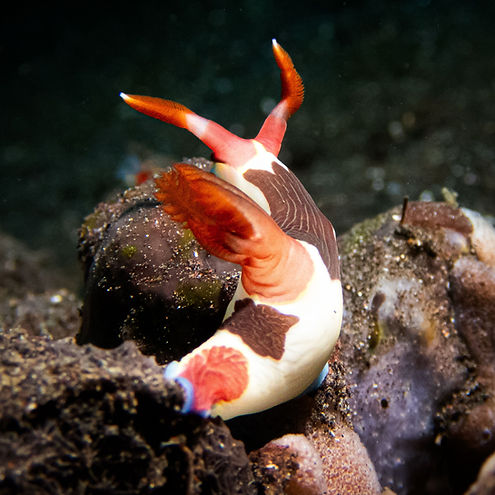
This project critically analyses the new BBNJ Agreement to assess whether it will, as intended, provide solutions to the crises facing global marine biodiversity. Through an analysis of legal subject construction in the text of the treaty, it will ascertain to what extent the BBNJ upholds and challenges the anthropocentric and colonial-capitalist norms of international law. Its deployment of a posthuman feminist methodology it will highlight the connection between international environmental law, humans, and the more-than-human environment through a lens of multispecies justice.

Reimagining Animal Law
Sam Hazle
This project seeks to answer the question: to what extent can introducing an intersectional and posthumanist framework for animal law and policy civil society organisations help them progress more effectively towards animal liberation. Animal liberation meaning the freeing of animals from of all forms exploitation and recognising their entitlement to flourish as living beings. This project draws on the framework of Critical Animal Studies to provide a critical, intersectional, and posthumanist analysis of developments in animal law and advocacy. This project provides three novel contributions to the field of animal law scholarship. First, this thesis constructs an ‘operational test and toolkit’ based on Critical Animal Studies to examine the practices of animal law and policy civil society organisations in UK. This provides, for the first time, an examination of the practices of these UK-based CSOs in this way, as well as a model to examine similar CSOs in other jurisdictions. Second, this project provides a codification of research on the process of social change, drawing on knowledge collected in relation to human social justice movements, and novelly examines how the law can be used most effectively for animal liberation progress. Third, this project provides a handbook for UK-based animal law and policy CSOs to use as a framework to reform their practices in a way that greater aligns with posthumanism and intersectionality, as well as lessons for animal law and policy organisations on other jurisdictions.

Social Systems, Constitutions and Non-Human Animals
Guilherme de Azevedo
This research examines the socio‑legal conditions shaping the emergence of Animal Global Law, drawing on the Brazilian experience and Luhmann’s social systems theory to analyse how the legal system navigates tensions between constitutional and civil law when attributing meaning to non‑human animals. By observing organisational decision‑making and animalist movements, the study highlights how demands for inclusion challenge legal boundaries and reveal cultural tensions. Attention is given to constitutional frameworks and judicialisation by NGOs, offering insights into how legal systems manage complexity and negotiate inclusion in recognising sentient beings.

Solarpunk and Multispecies Worlding
Iyan Offor
This project co-produces creative methods to reimagine law and advocate for legal reform in response to interconnected harms to animals, nature, and marginalised humans that law has failed to resolve. Three types of proposed creative methods (narrative, storytelling, ethical discourse) will be built by engaging the hopeful, ecological, justice-oriented norms embedded in solarpunk literature (and aligned theory). These will be co-developed with three communities (civil society organisations, creative writers, researchers) at three sites: interviews, blog discussions, and workshop.

Transformative Change for Biodiversity and Equity
Stacy Banwell
Professor Banwell is a Co-Investigator on the EU Horizon/UKRI project ‘Transformative Change for Biodiversity and Equity’ (TC4BE), which examines how extraction, production, consumption, trade, behaviour patterns and climate action interact to shape biodiversity outcomes within telecoupled agro-food systems. The project co-generates knowledge, tools and stakeholder engagement to design transformative pathways that enhance biodiversity and equity, including through legal innovations such as rights of nature, ecocide and restorative justice.

Transformative Interspecies Democracies (TIDE)
Cebuan Bliss
The project will create an intentional interspecies community as a place to experiment with co-learning and decision-making to model more compassionate ways of coexisting. Building on academic and legal expertise in animal and environmental ethics, and practical experience in animal care, community living, and regenerative gardening, the project integrates 4 pillars: Sanctuary + Community + Education + Research. The goal is to be small and financially sustainable – reinvesting any profit for its social purpose. It is a values-driven enterprise with a deep commitment to its kincentric social purpose and serving the community. It will combine art, science and spirituality to achieve its mission.