

People
Meet the Multispecies Collective, its affiliates, and its partners.

The Collective
Researchers connected by shared objectives and values leading large-scale research projects on multispecies flourishing.

Founding Leader

Dr Iyan Offor is an assistant professor in environmental law at the University of Birmingham. Iyan is a critical socio-legal theorist conducting interdisciplinary research on multispecies legalities. His active research projects are: Solarpunk Narrative and Multispecies (Legal) Worlding; and Transqueer Ecological Justice. Iyan recently published his monograph Global Animal Law from the Margins. Iyan is co-editor in chief for the Journal of International Wildlife Law & Policy and academic consultant for the UK Centre for Animal Law.

Deputy Leader
Michelle Strauss
Michelle Strauss is a PhD researcher at the School of Law at Birmingham City University. Her research is focused on participatory approaches in environmental decision making and how to involve non-humans in legislative processes. Michelle works as a claims professional at a global insurer focusing on professional indemnity insurance claims and is the founder of a charity whose objective is to improve animal welfare by using the law to shine a light on systemic animal welfare problems and to seek solutions. She is a dual qualified solicitor, admitted to the bar in New Zealand in 2007 and in England and Wales in 2019.

Events Coordinator
Mo Esan
Mo Esan a PhD researcher in Animal Law at University of Birmingham, funded by the Midlands4Cities Doctoral Training Partnership. Mo conducts research on African animal law, particularly the Animal Welfare Strategy for Africa and Third World Approaches to International Law (TWAIL), decolonial theory, and critical animal studies. Mo served as a research assistant for the Cambridge Centre for Animal Rights Law and is currently on the Animal Charity Evaluators Board. Mo's work seeks to bridge scholarship and practice, advancing innovative frameworks for animal law and global justice, with Africa in mind.

Membership Coordinator
Bethan Smith
Bethan Smith is a PhD student in law at the University of Birmingham. She is also a Postgraduate Teaching Assistant in law at the University of Birmingham. Bethan’s research focuses on the protection of marine animals, environments, and human culture. Bethan researches animal law, environmental law, biodiversity conservation law, culture, environmental ethics, and critical animal and environmental legal theory. Bethan’s experience specialises in marine animal issues but also includes varied wild, farmed, and domestic animal issues. Bethan has worked on international and national projects for animal and environmental protection. Bethan’s other experiences include being a researcher, guest writer, and speaker at the UK Animal Law Conference 2025.

Communications Coordinator

Isabel Stanley
Isabel Stanley is an ESRC-funded PhD student in the Department of Political Science and International Studies, School of Government, at the University of Birmingham. Her PhD project commenced in October 2025 and is exploring whether UK assistance dogs are performing ‘Acts of Citizenship’. The project is interdisciplinary, with supervisory support from the University of Birmingham’s School of Biosciences. Isabel also volunteers on the Canine Partners Research Working Group. She previously worked in academia as a project manager, managing large-scale research projects.

Member
Love Alfred
Love Alfred is a lecturer at Birmingham City University. She conducts research on just transition. Her doctoral work looked at energy access and the relevance of a multilevel perspective for a just transition. This research has crystallised into work aimed at educating and engaging non-state actors – such as faith-based organisations, institutions, Indigenous communities and ‘non-humans’ (multispecies consideration) within the ongoing shift towards a sustainable transition. Love is also a Barrister and Solicitor of Law (Nigeria) and has worked as a parliamentary counsel and a state counsel. She is a member of the Nigerian Bar Association (NBA), Female lawyers Association of Nigeria (FIDA) and Socio-legal Scholars Association (SLSA).

Member
Stacy Banwell is Professor of Criminology at the University of Greenwich and a leading scholar in non-speciesist and more-than-human criminology. Her research examines conflict-related sexual and reproductive violence against human and nonhuman animals, the intersections of gender, climate change and atrocity crimes, and multi-species justice in conflict and post-conflict contexts. These themes are central to her two most recent monographs: The War Against Nonhuman Animals: A Non-Speciesist Understanding of Gendered Reproductive Violence and An Intersectional Analysis of Climate Change and Atrocity Crimes: Life on Earth is in Crisis. Her work, which addresses harm experienced by vulnerable and marginalised human and nonhuman groups, has informed policy developments and has been cited by high-level bodies including a U.S. Supreme Court, the United Nations, the UN General Assembly, and the UK Ministry of Justice. As part of the EU Horizon/UKRI project Transformative Change for Biodiversity and Equity, Stacy is currently evaluating sustainability transitions through legal pathways such as rights of nature, ecocide, and restorative justice.

Member
Gray Black is a PhD Candidate in the School of International Relations at the University of St Andrews. Black's research on speciesqueer political phenomenology intersects queer ecology, political and social theory, cultural anthropology, as well as science and technology studies. Alongside their affiliation with the Multispecies Collective, Black is also the Administrative and Research Assistant for the Centre for Art and Politics and a Fellow of St Andrews’ Interdisciplinary Postgraduate College.

Member
Cebuan Bliss
Dr Cebuan Bliss is an independent researcher and founder of the Transformative Interspecies Democracies (TIDE) project. TIDE will be a research and education centre for multispecies flourishing, tentatively located in Portugal. This is a work in progress and she would like to design and build the centre through a process of multispecies design and collaboration. Her research interests include animal and biodiversity governance, interspecies communication, non-human representation, animals in sanctuaries, nature-based learning and storytelling.

Member
Louisa is a Northern Bridge funded PhD candidate at Newcastle Law School, Newcastle University. She researches on critical international environmental law, posthuman feminist theory, and multispecies justice. Building on an understanding of the explicit interconnection between social and environmental injustice, her research applies methods from posthuman, queer, decolonial and intersectional feminist theory to international environmental law and, in particular, the BBNJ Agreement. The use of these methods in relation to international environmental law highlights submerged hierarchies of power, both among humans and between humans and the more-than-human world.

Member

Dr Guilherme is an Associate Professor of Sociology and Theory of Law at the Universidade do Vale do Rio dos Sinos (Unisinos), Brazil. He is a researcher and Professor in the doctoral and master’s programmes in Law at Unisinos and completed a postdoctoral research fellowship at the University of Birmingham (United Kingdom). He holds both a PhD and an MSc in Law from the Graduate Programme in Law at Unisinos.
He is a member of the CNPq Research Group on Theory of Law, a founding member of ABraSD – Associação Brasileira de Pesquisadores em Sociologia do Direito, and a member of the Red Latinoamericana de Sistemas Sociales y Complejidad (RELASSC). His research is developed within the research line “Society, New Rights and Transnationalisation”, with a focus on Sociology of Law, Theory of Law, Animal Law and Anti-Discrimination Law. His research interests include Law and non-human animals, Social Systems Theory, the Sociology of Constitutions, legal systems and inequalities, organisations and legal decision-making, global society and democracy. He currently coordinates the project “Social Systems, Constitutions and Non-Human Animals: The Systemic-Cultural Foundations for the Construction of Animal Law Theory”.

Member
Fatimazahra Dehbi
Fatimazahra Dehbi is a PhD Student at the University of Greenwich, where her research examines the potential avenues under international law through which the right to a healthy environment could be invoked to address the potential human rights and environmental impacts of deep seabed mining in the Area. Fatimazahra is a member of Steering Group of the Centre for Transformative and Global Justice (University of Greenwich), the International Law Doctoral Training Network (Institute of Advanced Legal Studies, University of London), and the Business, Human Rights and Environment Research Group.

Member
Christina Easton is Assistant Professor in the Ethics of Non-Violence at the University of Birmingham. She works in political philosophy and especially the ethics of public policy-making. Recent work explores questions at the intersection of animal ethics, education and justice, examining how institutions can better reflect the interests of both human and non-human animals. Christina's current research includes projects on promoting plant-based diets in schools and on the justification and practice of education for multispecies flourishing. She has also written on liberalism and legitimate state policy. Her first monograph, Teaching Values Whilst Respecting Difference, was published by Bloomsbury in 2026.

Member
Sam Hazle is a second year PhD candidate at Birmingham City University. Sam conducts research on animal law, intersectionality, and social justice. His qualifications include an LLB (Hons) from Newcastle University, and an LLM in Global Environment and Climate Change Law from the University of Edinburgh.

Member
Dr Emily Jones is a Senior Research Fellow in the Newcastle University Academic Track (NUAcT) programme based in Newcastle Law School. Dr Jones’ interdisciplinary research applies critical theory including feminist, queer, posthuman, postcolonial and critical disability studies, to analyse and re-imagine international law. Her work spans several fields of international law, such as international environmental law, international human rights law, science, technology and international law and gender and conflict, among others.

Member
Claire Lathwell
Claire Lathwell is a Doctoral Researcher in Law at Birmingham City University (BCU). Claire is conducting socio-legal research on animal law and criminal justice. Claire’s research interests also include environmental law, green criminology, 20th century continental philosophy (especially Foucault) and political philosophy. Prior to commencing her doctoral research at BCU in September 2024, Claire spent over 6 years practising environmental, human rights and immigration law as a Solicitor in England and Wales. Claire holds an LLM in Professional Legal Practice and a BA(Hons) degree in Philosophy and Politics.

Member

Sean Madden is a teaching fellow in law at the University of Birmingham. He adopts a critical approach to international law and global governance, conducting research on the impact of globalised industrial agricultural production on food security, human rights, and climate breakdown, with particular regard to Indigenous and minority communities in the global south, and women within those communities. The work interlinks with an interest in the rights of nature and non-human animals emergent of an ethical veganism comprised of animal rights, environmentalism, and human rights, and recognises the symbiotic relationship between the Earth and all elements of its biosphere. Sean previously completed a PhD at the University of Birmingham, an LLM in International Development Law and Human Rights at the University of Warwick, and is a member of the Socio-Legal Studies Association and Society of Legal Scholars.

Member
Deborah Weinrauch
Born in the United States, Deborah Weinrauch completed a B.Sc. degree in Education and received Teacher Certification from the University of Wisconsin-Milwaukee. Relocating to the Middle East, Deborah completed law studies at the Hebrew University in Jerusalem. Once licensed as an attorney, she focused on human rights and animal issues and taught law courses. In London, Deborah completed her LL.M. in Criminal Law and International Law of the Sea, followed by an M.Phil. on the ‘Financial Rights of the Nongainfully-Employed Woman in England and Israel’. Currently, she is a doctoral candidate at the University of Birmingham, researching animal cruelty and neglect prosecution in the United States while active in animal and environmental causes.

Member


Jacqui Wilmshurst is a PhD researcher at the Open University. She uses multispecies autoethnography to explore and analyse her own caring relationships with wild-born rescued animals in the sanctuary that she runs from her home. Her research focuses on questions of ‘appropriate care’, and surfaces roles and relationships that influence this towards quality of life for permanently captive non-domesticated animals. Theoretical frameworks applied to the analysis include anthrozoology, care ethics, transspecies psychology, feminist animal studies, and animal welfare science. Her work seeks to inform care practice and policy as well as future research, building on an original concept in animal care of ‘relational rehabilitation’.
The Collective's Affiliates
A group of researchers, practitioners, change-makers and future-oriented creatives who are interested in the collective’s objectives and values and who may be conducting or engaged with research or practice toward multispecies flourishing.

Affiliate Member
Frida Hernandez Pena is a final year doctoral researcher at Birmingham City University. Frida’s research focuses on environmental constitutionalism and the rights of nature in Mexico. She participated as a member of the Committee of Postgraduates in Latin American Studies in the UK (PILAS) from 2023 to 2024 and currently works in research management at BCU. Her research interests include: The philosophy of rights of nature, environmental justice, and postcolonial studies.

Affiliate Member
Madelena Mañetto Quick
Dr Madelena Mañetto Quick is a Lecturer in Visual Communication Design at University of Wales Trinity Saint David. Madi’s work centres multispecies design and design justice and has been focused on understanding the worlds we build with farmed animals. Madi’s recent research explores interspecies relationships within farms and farm animal sanctuaries and the stories surrounding them. As a creative design researcher, Madi adopts an interdisciplinary approach, entangling multispecies ethnography, narrative studies, and speculative design. Her work aims to challenge prevailing assumptions, reimagine more-than-human relationships, and envision radical, hopeful futures through critical design and storytelling.
Affiliate Member
Elizabeth O'Connor
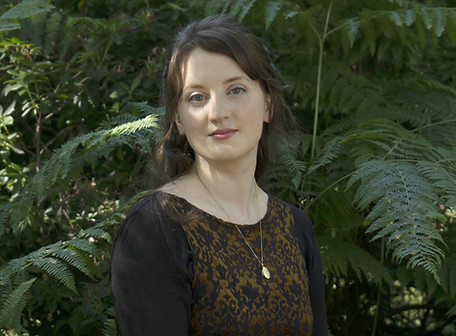
Elizabeth O’Connor lives in Birmingham working as a Researcher Development Officer for the University of Birmingham and as a Freelance Author. Her short stories have appeared in The White Review and Granta, and she was the 2020 winner of the White Review Short Story Prize. She holds a PhD in English Literature from the University of Birmingham, specialising in the modernist writer H.D. and her writing of coastal landscapes and ecologies. Her debut novel, WHALE FALL, was published in 2024 by Picador in the UK and Pantheon in the US and will be published in twelve other territories. It was chosen as one of the Observer's ten best debut novels of the year, and a book of 2025 by the New York Times and the New Yorker. It won the Chautauqua Prize and a Betty Trask Award.

Affiliate Member
Dr. Veerle Platvoet is senior research fellow at the Max Planck Institute for Comparative Public Law and International Law. Veerle conducts research on wildlife law, international environmental law, and animal law. Veerle is also co-editor in chief at the Global Journal of Animal Law, co-founding member of the Helsinki Animal Law Centre and board member of the Dutch Society of Animal Rights Law
The Collective's Partners
A network of organisations and individuals that are aligned to the collective's shared objectives and values or that partner, collaborative or connect with the collective in pursuit of multispecies flourishing. Partners are independent of the collective and their views are their own and will not necessarily align with the collective’s objectives and values in all cases.

Partner
European Institute for Animal Law & Policy
The European Institute for Animal Law & Policy is a think-and-do tank based in Brussels, Belgium, whose mission is to achieve better treatment of all animals by enforcing, improving, and changing EU law and policy in the European Union (EU). Specifically, the Institute aims to end all animal oppression in the EU through the full expression of Article 13 of the EU Constitutional Treaty, which mandates that the EU and its Member States “pay full regard to the welfare requirements of animals” by virtue of their sentience.

Partner
Paula Sparks World Moot on International Law and Animal Rights
The Sparks Moot is the world's first global moot competition and training courses on animal rights. It combines traditional aspects of law and policy with contemporary issues of animal rights to train future generations in securing balanced protections for all sentient life. It does so through policy negotiation and legal advocacy competitions, and training courses that enhance the skills needed to succeed in these areas.
The Collective's Network
We engage regularly with our network through our events and communications.
We host members of our network through the Multispecies Collective Visiting Researcher Programme. Read about our visitors here.

Visitor (2026)
Karolina Heck is a Ph.D. student at the University of Flensburg and Technical University Berlin Germany, and currently a Visiting Researcher at the University of Birmingham. Trained as a geographer (BSc at Freie Universität Berlin, MSc in Geography of Global Change at Universität Freiburg), Karolina worked as a water analyst for a environmental policy consultancy, on projects for UN-Water, GIZ, the European Commission and the FAO. Today they teach on queer climate justice, queer ecology and embodied knowledge. They are a member of the Rosa Luxemburg Foundation's research training group "Crisis and Socio-Ecological Transformation" and of the EnJust network. Read on to learn about Karolina's research project and visiting stay. RESEARCH PROJECT: Their research explores queer perspectives on the climate crisis, examining how queer communities relate to the more-than-human, experience climate change, and respond to climate disruption. They are in particular interested in how artistic and embodied practices can contribute to climate research, using methods such as choral music and zine-making. Their work draws on queer phenomenology, theories of justice, and queer and transecologies. VISITING PROGRAMME: In Birmingham, Karolina is tuning into their queer choir data, composing a few articles, and wandering the campus in search of good ideas. They are also looking forward to joining the multispecies collective, where they hope to learn from, with and alongside more-than-human companions, and to see what grows when different kinds of knowing share the same space.

Visitor (2026)
Colette Schefer-Peisker
Colette Schefer-Peisker is a doctoral candidate at Prof. Dr. Norer's Chair of Public Law and Rural Law at the University of Lucerne. Her research focuses on animal welfare in slaughter. In addition to her dissertation, Colette has written several articles on animal welfare law, including on animal dignity and criminal animal welfare law. Alongside her research, Colette works as a lawyer in environmental consulting. Read on to learn about Colette's research project and visiting stay. RESEARCH PROJECT: My dissertation examines the legal framework and practical challenges of animal welfare in Swiss slaughterhouses. The first part outlines the historical and systematic development of animal welfare law in the field of slaughter and critically analyses the compatibility of slaughter practices with the dignity of creatures enshrined in the Federal Constitution. The second part focuses on the relevant regulations and their enforcement in relation to key animal welfare-related processes in the slaughter process. The focus is on animal welfare requirements for stunning and bleeding and the importance of veterinary entry checks to assess animal health. Particular attention is paid to the critical assessment of current stunning methods and the examination of innovative alternatives, such as stunning with noble gases or the Low Atmosphere Pressure Stunning (LAPS) method. VISITING PROGRAMME: During my research stay, I intend to examine the role of mandatory video surveillance in English slaughterhouses with regard to the implementation of animal welfare legislation, comparing it with the situation in Switzerland. I will examine the experiences gained so far with mandatory video surveillance and whether it can make a positive contribution to improving animal welfare in the slaughter process. The aim of my research is to gain insights into the possible introduction of video surveillance in Swiss slaughterhouses.