
The Multispecies Collective Relaunches at the University of Birmingham

The Multispecies Collective, founded by Dr Iyan Offor, has relaunched at the University of Birmingham, bringing together researchers, practitioners and creatives committed to shaping futures where animals, ecosystems and human societies can flourish together.

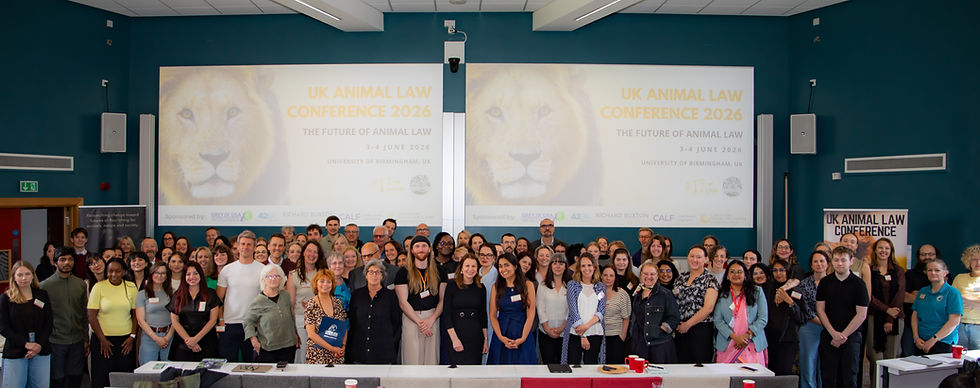
The Collective marked its relaunch with a celebratory event at Birmingham Law School on Thursday 5 March. Originally established elsewhere, the network is now hosted within Birmingham Law School, where Dr Offor is Assistant Professor in Environmental Law.
The Collective provides a collaborative environment for exploring how law, policy, culture and creative practice can respond to the interconnected crises facing animals and nature. Its members work across disciplines to rethink how multispecies flourishing can be supported in legal, political and social systems.
Reflecting on the Collective’s mission, Dr Offor said: “We believe that the only way through multispecies crises is to work collaboratively, linking knowledge and practice across disciplines, and drawing connections between law and policy reform and creative and artistic practice.”
Alongside hosting several research projects that are redefining the landscape of animal and environmental studies, the Collective runs a programme of public events that bring together its interdisciplinary expertise. These events explore some of the most pressing ecological challenges of our time and highlight innovative approaches emerging across the University and beyond. The relaunch event gathered collaborators from across the network to discuss ongoing work and future opportunities for impactful research and engagement.
Dr Offor reflected: “I’m so encouraged by the enthusiasm with which everyone engaged with the idea of multispecies flourishing. The event connected the global work of our network with the wealth of multispecies research happening across the University of Birmingham. My hope is that our (re)launch will not only encourage people to engage with the incredible long‑term projects led by our collaborators, but also help us grow our membership and forge new connections in the days and months ahead.”
The Multispecies Collective now enters its next phase with renewed energy, expanding its research, partnerships and public engagement to support more just and flourishing multispecies futures.


Comments